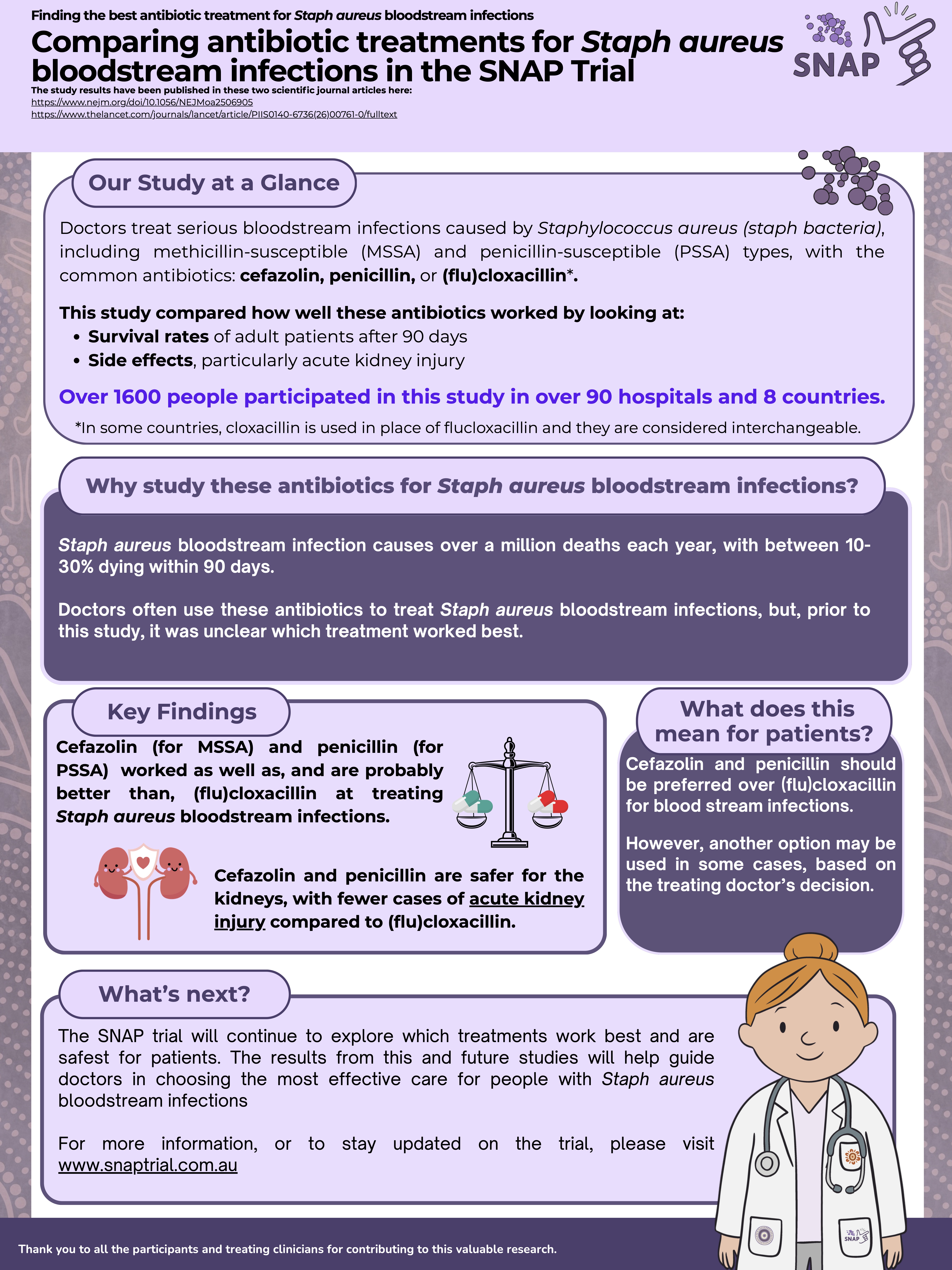
Our Study at a Glance
Doctors treat serious bloodstreaminfections caused by Staphylococcus aureus (staphbacteria),including methicillin-susceptible (MSSA) and penicillin-susceptible (PSSA)types, with the common antibiotics: cefazolin,penicillin, or(flu)cloxacillin.
This study compared how well these antibiotics worked by looking at:
•Survival rates ofadult patients after 90 days
•Side effects,particularly acute kidney injury
Over 1600 people participated in this study in over 90 hospitals and 8countries.
Why study these antibiotics for Staphaureus bloodstream infections?
Staph aureus bloodstream infection causes over a million deaths each year, with between 10-30% dying within 90 days.
Doctors often use these antibiotics to treat Staph aureus bloodstream infections, but, prior to this study, it was unclear which treatment worked best.
Key Findings
Cefazolin (for MSSA) and penicillin (for PSSA) worked as well as, and are probably better than, (flu)cloxacillin at treating Staph aureus bloodstream infections.
Cefazolin and penicillin are safer for thekidneys, with fewer cases of acutekidney injury compared to (flu)cloxacillin.
What does this mean for patients?
Cefazolin and penicillin should be preferred over (flu)cloxacillin for bloodstream infections.
However, another option may be used in some cases, based on the treating doctor’s decision.
What’s next?
The SNAP trial will continue to explore which treatments work best and are safest for patients. The results from this and future studies will help guide doctors in choosing the most effective care for people with Staph aureus bloodstream infections.
The study results from the antibiotic backbone domain have now been published in scientific journals!


The SNAP trial includes all age groups because people of all ages.
A summary of how Staphylococcus aureus and penicillin have been instrumental in both the success and failure of one another since they met. Carly Botheras (PhD Candidate, Geelong Centre for Emerging Infectious Diseases, Barwon Health)


